
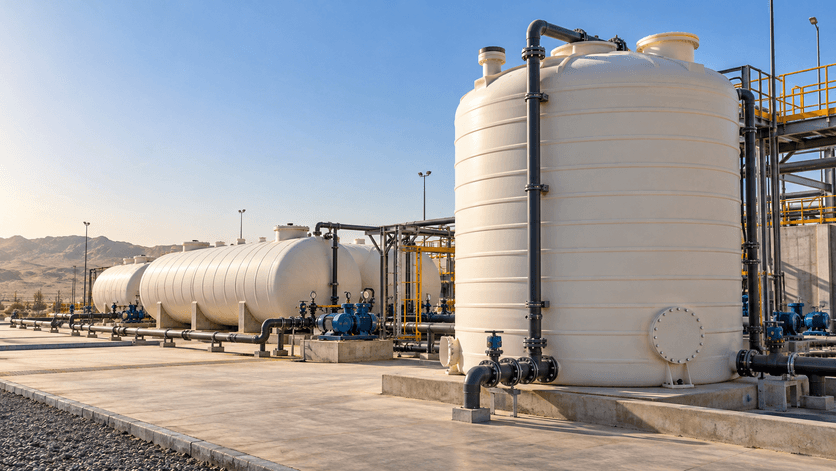
Tank Solutions
Polyethylene Tanks
Rotomolded LLDPE and HDPE tanks for water and chemical storage — vertical, horizontal and underground.
LLDPE / HDPE Polyethylene Storage Tanks in Saudi Arabia
Rotomolded polyethylene tanks are seamless, corrosion-free and practical for small to medium storage volumes. Falcon supplies LLDPE and HDPE tanks where they are the right fit, and recommends FRP or steel when capacity, temperature or chemical exposure calls for it.
Multi-layer rotomolded construction is available where the application calls for it. Final suitability is always confirmed against the stored liquid and site conditions.
 Tank Solutions
What We Offer
Seamless one-piece body
Rotomolding produces a single moulded shell with no laminate joints to fail.
Corrosion-free
Polyethylene does not rust, which suits water storage and many chemical duties.
Water and chemical duty
Suitable for a wide range of liquids once compatibility has been confirmed.
Multiple orientations
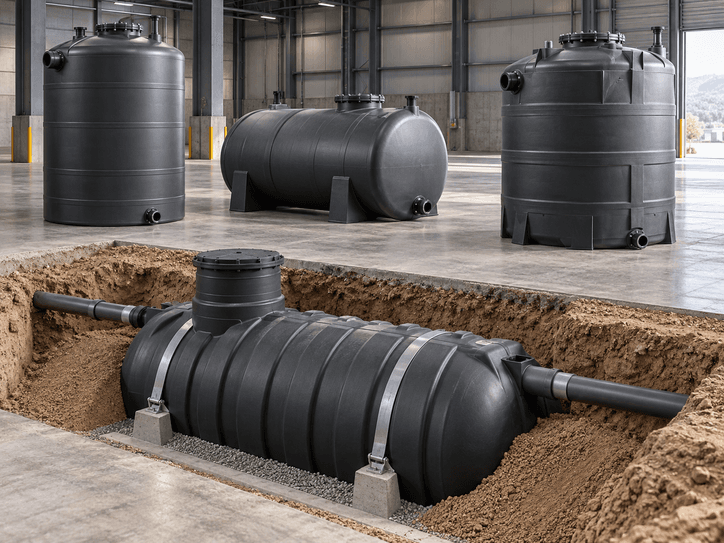
Vertical, horizontal and underground formats for different site layouts.
Straight material advice
If polyethylene is not the best choice for your liquid or capacity, we say so and propose an alternative.
Installation guidance
Base, connection and installation guidance so the tank performs as designed.
Types of Polyethylene Tanks
Each configuration has its own page with the detail relevant to that type.
Vertical PE Tank
The standard rotomolded polyethylene tank shape for water and chemical storage.
View type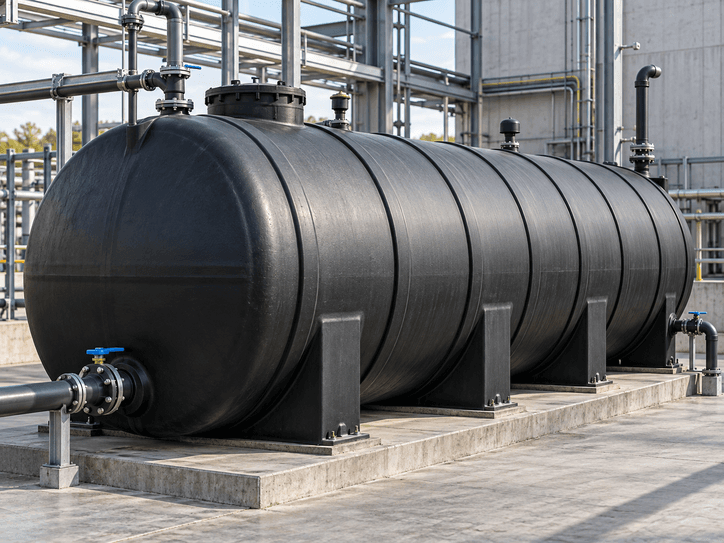
Horizontal PE Tank
A lower-profile rotomolded tank for restricted-height installations or skid mounting.
View type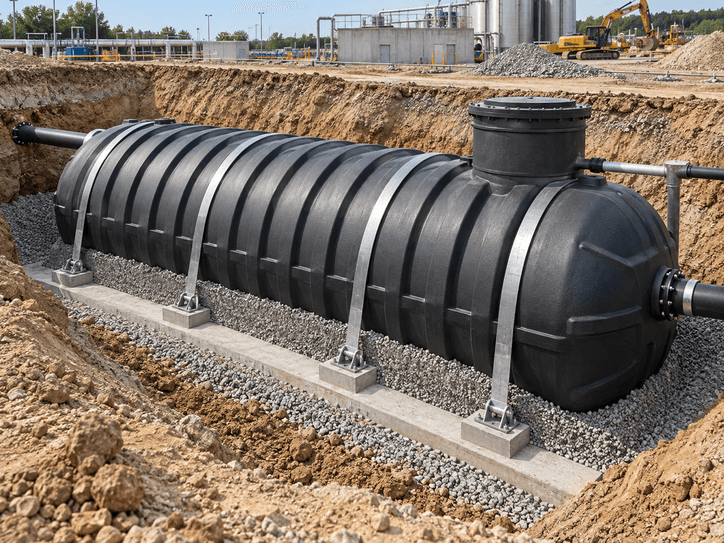
Underground PE Tank
Buried polyethylene storage for smaller water and chemical volumes.
View type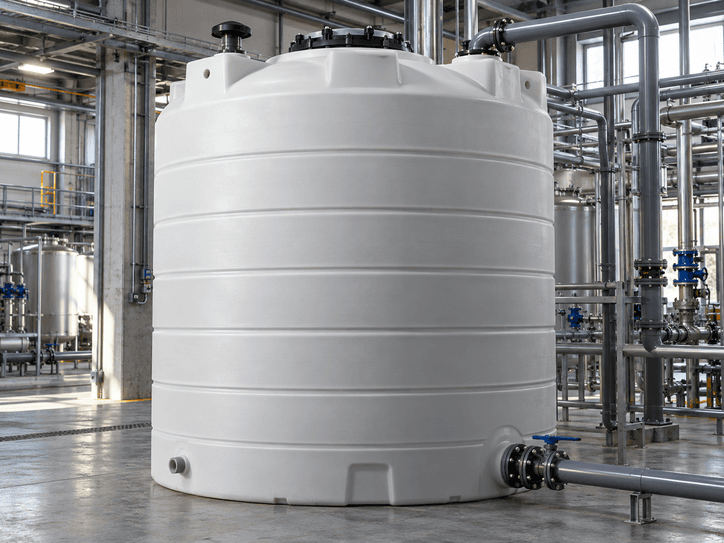
Multi-Layer Rotomolded PE Tank
A multi-layer construction for applications needing extra barrier or UV protection.
View typeTechnical Snapshot
- Material
- LLDPE / HDPE, where applicable
- Process
- Rotational molding, including multi-layer construction
- Orientation
- Vertical, horizontal and underground
- Service
- Water, chemical and general liquid storage
- Best suited to
- Small to medium capacities — larger volumes typically move to FRP/GRP or steel
- Confirmation
- Chemical compatibility and temperature checked before recommendation
Where It’s Used
From Enquiry to Supply
- 01
Confirm liquid and capacity
What is stored, how much, at what temperature.
- 02
Check compatibility
Polyethylene suitability confirmed, or an alternative material proposed.
- 03
Select model and fittings
Orientation, outlets and accessories matched to the installation.
- 04
Supply and support
Delivery with installation guidance and after-supply support.
Reference Sizes
Documented configurations we can reference as a starting point — confirmed per project, not a committed availability.
- Horizontal PE
- 10,000 L reference.
- Vertical PE
- 15,000 L and 32,000 L references.
Indicative reference configurations from prior project and design context — not a committed catalogue range or current availability. Final capacity and dimensions are confirmed against the approved drawing and QA file for each project.
Standards & Compliance
- ASTM D1998-21
- Flat-bottom, upright, cylindrical, one-piece seamless rotationally molded PE tanks — not a buried- or pressure-service approval.
- NSF/ANSI/CAN 61
- Health-effects criteria for materials in contact with drinking water — product-specific certification confirmed separately.
A standard reference is not proof of third-party certification. Falcon states “designed and manufactured to” a standard only when it is backed by the controlled design and QA file; chemical, potable-water and underground suitability require separate product-specific evidence. Saudi/GCC approvals (SASO/SABER, Civil Defense, environmental, municipal, utility and owner approvals) are project- and product-specific.
Accessories & Fittings
Nozzle size, material, reinforcement and orientation are set in the nozzle schedule for each tank. Accessories are fitted as the service requires.
Frequently Asked Questions
LLDPE or HDPE — which should I choose?
Both are used for rotomolded tanks, and the better choice depends on the stored liquid, temperature and capacity. Tell us what you are storing and we recommend the suitable grade where polyethylene is appropriate.
Are polyethylene tanks suitable for chemicals?
For many chemicals, yes — but not all. Compatibility depends on the chemical, concentration and temperature, so we check it before recommending polyethylene or an FRP alternative.
What capacity can I get in polyethylene?
Polyethylene suits small to medium capacities. For larger volumes we usually recommend FRP/GRP or steel — share the capacity you need and we advise the best option.
Ready to Start Your Next Project?
Get in touch with our engineering team for a free consultation and a tailored proposal for your site.